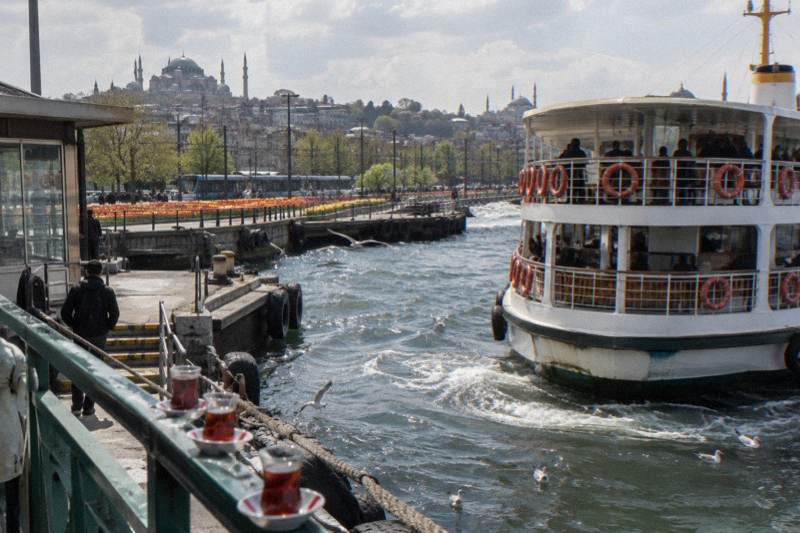
Rumeli Hisari And Anadolu Hisari From A Bosphorus Boat
Rumeli Hisari and Anadolu Hisari face each other across the narrowest stretch of the strait, just south of the Second Bridge. Most sunset yachts and several dinner boats name them as pass-bys; no boat lands at either.
Short answer
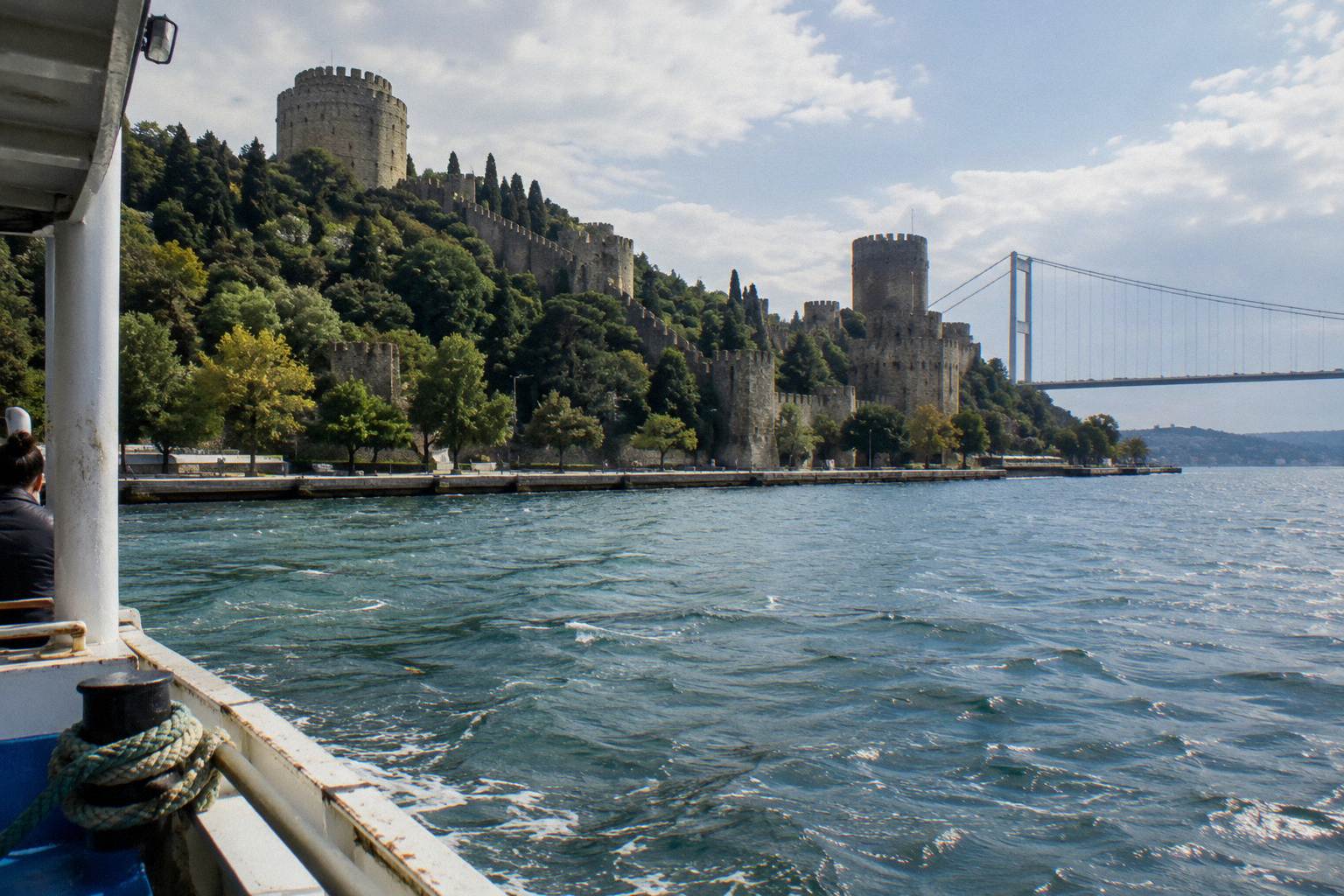
Rumeli Hisari, built 1451 to 1452 on the European bank, and Anadolu Hisari, the oldest surviving Turkish structure in Istanbul, sit on opposite shores just south of the Second Bridge. The sunset yachts from Kabatas and the 2-hour option of the audio boat from Eminonu pass both; no tour boat lands at either.
Rumeli Hisari went up in about four months of 1452, on the orders of Mehmed II, so its cannons could close the strait ahead of the siege of Constantinople. Across the water on the Asian bank, Anadolu Hisari had already been standing for decades and today is the oldest surviving Turkish architectural structure in Istanbul. Every boat that reaches the Second Bridge passes both, and no boat stops at either.
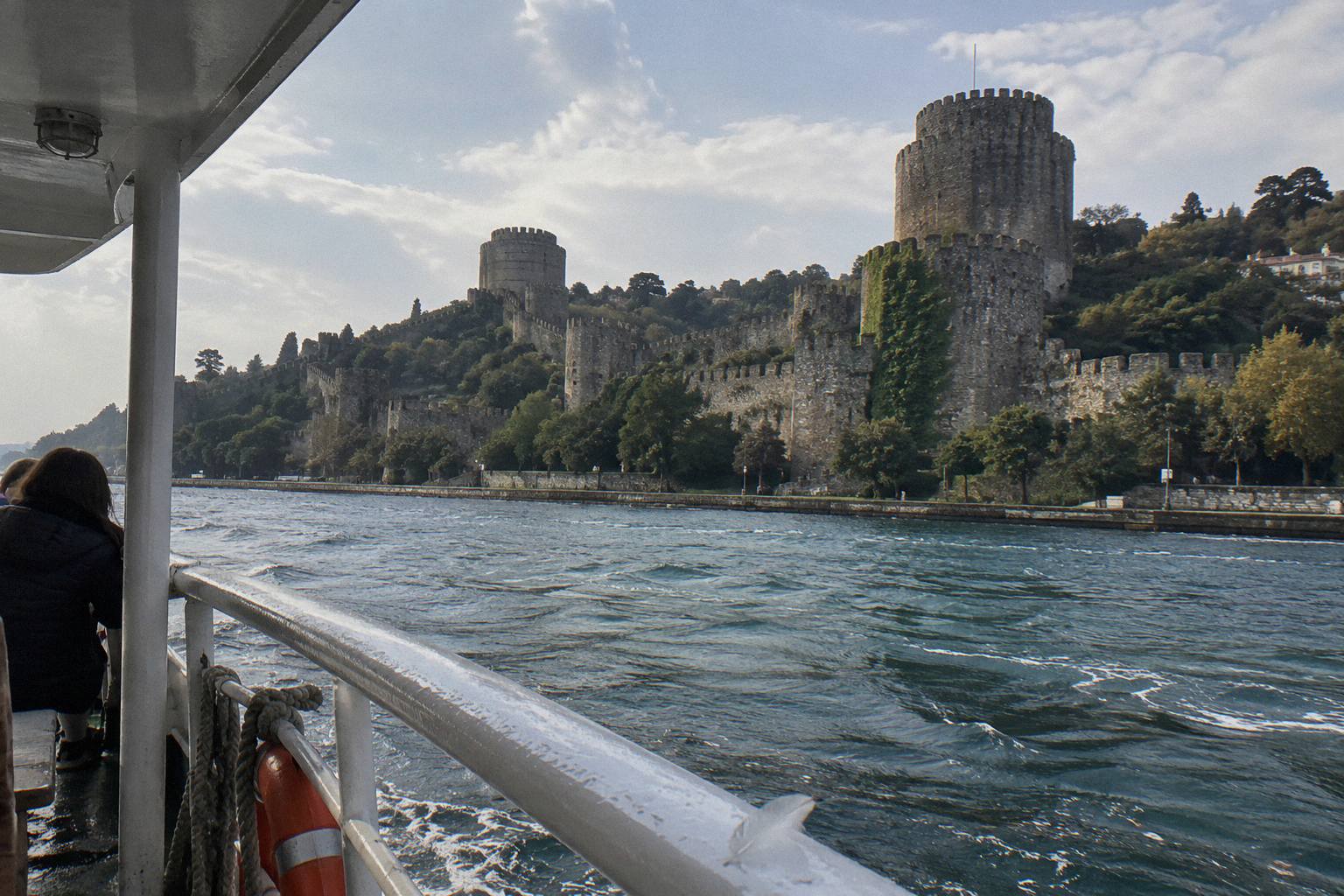
The pair is one of the clearest examples of how the Bosphorus Cruise Turkey itineraries work: the sights are shown from the water, named by a guide or an audio commentary, and left behind. The strait itself is 31 km long and narrows to 700 m between Kandilli Point and Asiyan, and it is that pinch point, the stretch where the fortresses stand, that gives the fortress section of any boat route its drama. More on the geography of the waterway is in the overview of the strait.
For anyone choosing a boat around the fortresses rather than around palaces or dinner, the questions are practical ones: which trips actually name the fortresses in their route text, how far north a route has to go before the walls come into view, and which side of the deck to hold. The sections below take those one at a time.
Where Rumeli Hisari Sits And Why It Was Built
Rumeli Hisari was built in 1451 to 1452 on the European bank, and Anadolu Hisari on the Asian side is the oldest surviving Turkish architectural structure in Istanbul. Both are passed on the water by every short boat that reaches the Second Bridge, and no tour boat lands at either one.
The European fortress has the sharper story. Construction began on 15 April 1452, and the walls, towers and the great cylindrical tower at the water's edge were finished within the year, ahead of the siege of Constantinople. Its guns could reach ships midstream, and the Ottomans used that reach to levy a toll on vessels passing through the strait; the full history of Rumeli Hisari records the toll and the construction dates in detail. Since 1960 the site has been a museum, entered on foot through its land gate.
Anadolu Hisari is smaller and older. It stands in the neighbourhood of Beykoz that took its name from it, a compact walled complex with a single tall tower right at the waterline, and the history of Anadolu Hisari confirms its status as the oldest surviving Turkish structure in the city. Where Rumeli Hisari spreads up its hillside in a long curtain of towers, Anadolu Hisari reads as one dense block against the trees.
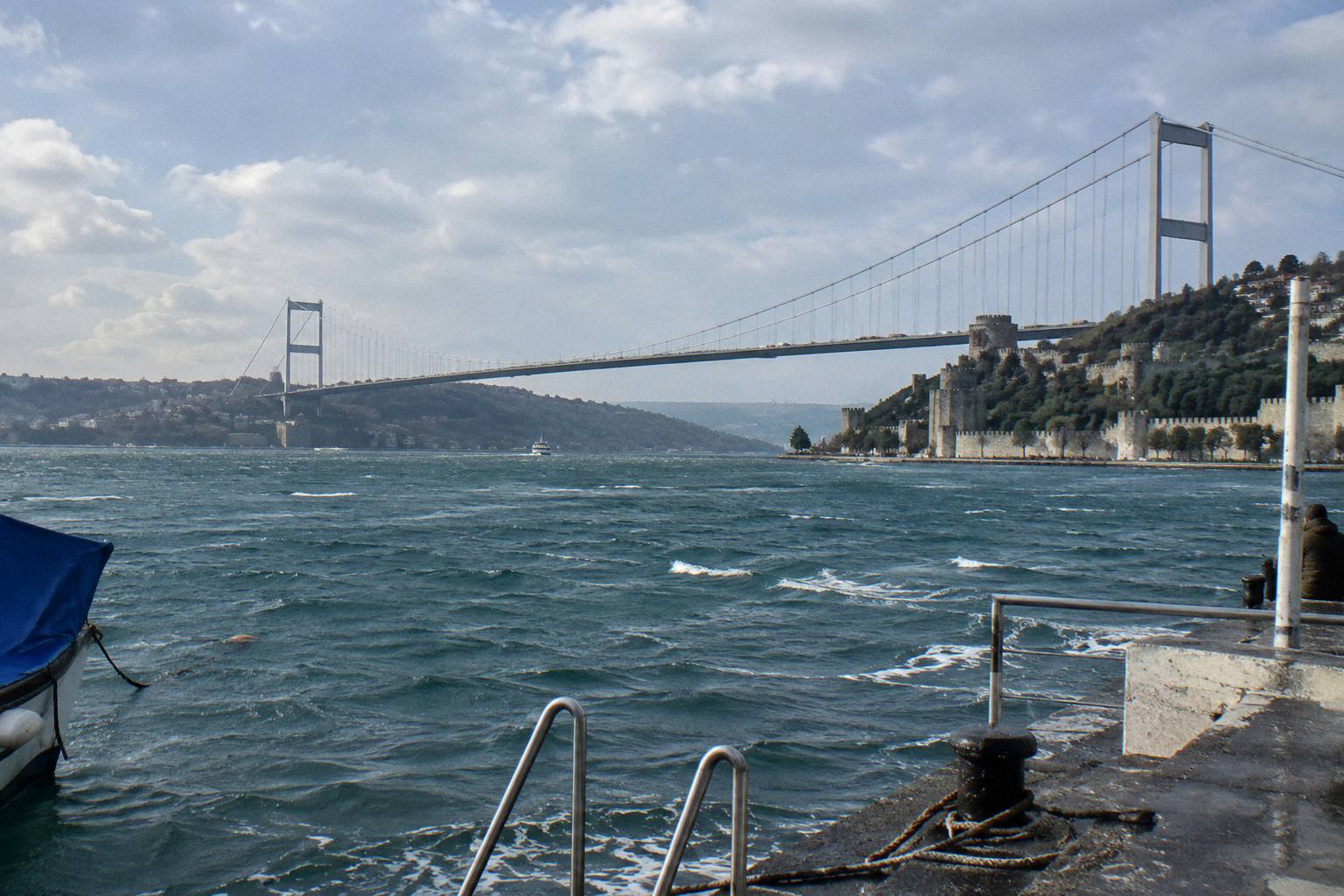
From a boat the contrast is the point. Coming north, the Asian fortress appears first as a tower low on the right, then the European fortress opens across the whole left bank, and the Second Bridge spans the water between them a moment later. Guides on the live-commentary boats usually name them in that order too.
The practical consequence of all this history is simple: the fortresses cost nothing to see from the water and cannot be visited from the water. A boat ticket covers the pass-by. Going inside Rumeli Hisari afterwards is a separate walk from the European shore, and no route here combines the two.
| Rumeli Hisari | Anadolu Hisari | |
|---|---|---|
| Bank | European | Asian |
| Built | 1451 to 1452 | Older; the oldest surviving Turkish structure in Istanbul |
| Ordered by | Mehmed II | Ask the operator |
| Status today | Museum since 1960 | Historic site in Beykoz |
| Seen from a boat | Yes, named in many route texts | Yes, named in several route texts |
| Boat landing | None, ever | None, ever |
Which Boats Name The Fortresses In Their Route
Most sunset yachts from Kabatas name both fortresses in their route text, and several dinner boats name Rumeli Fortress as a pass-by on the illuminated stretch. The 2-hour option of the shared audio boat from Eminonu reaches the Second Bridge, so it passes the pair as well.
Route text is the reliable signal here. A trip that lists Rumeli Fortress or Anadolu Hisari by name is telling the reader, in the operator's own words, that the boat goes far enough north to pass them. A trip whose route stops at Ortakoy or the First Bridge does not reach the fortress stretch at all, however grand its other sights are.
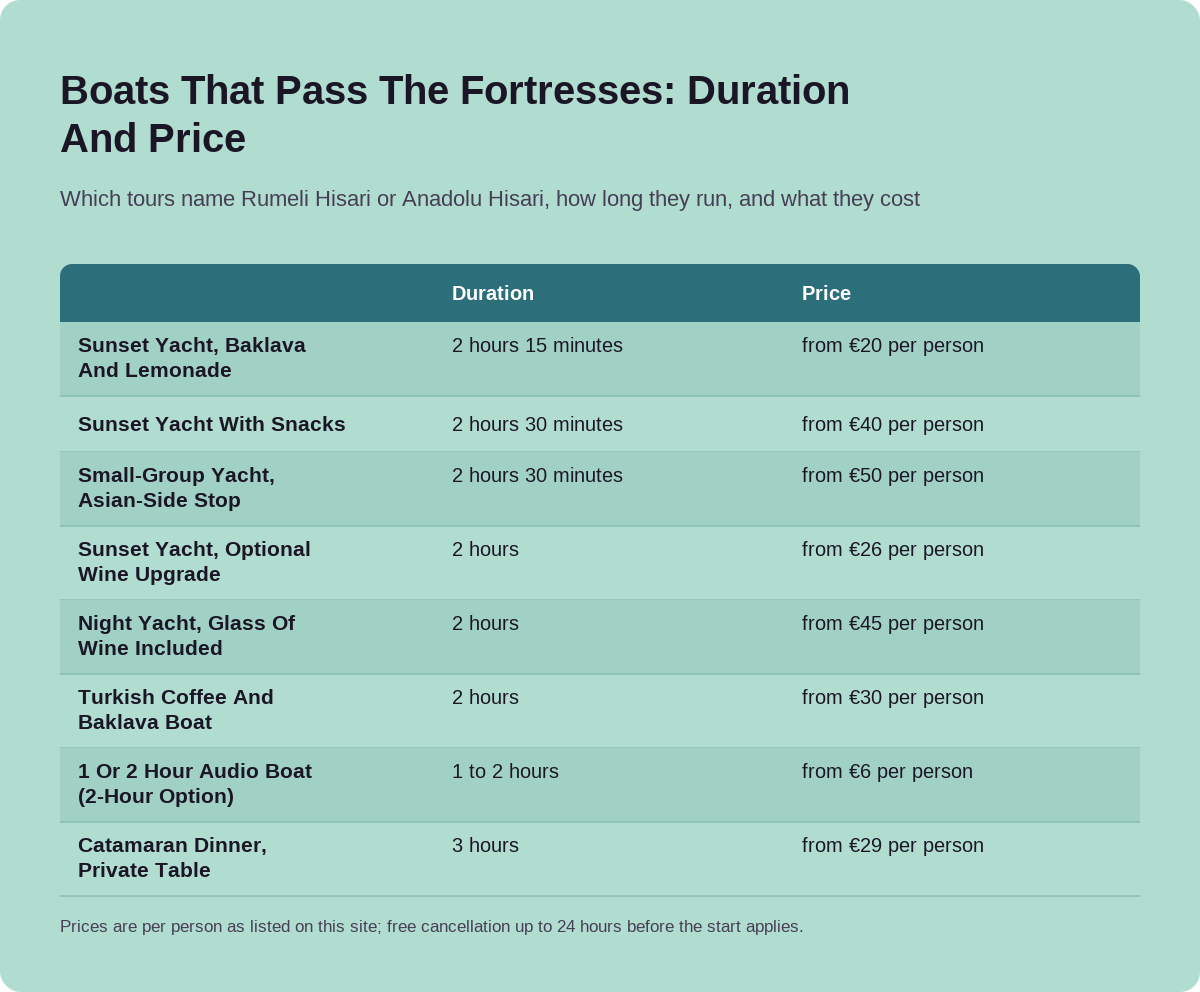
The clearest example of a trip that names both is Sunset Yacht, Baklava And Lemonade: from €20 per person, rated 4.9 from 5,804 reviews, a 2 hours 15 minutes sail from Kabatas that lists Rumeli Fortress and Anadolu Hisari among its pass-bys, with fruit plates, baklava and homemade lemonade served aboard. The Small-Group Yacht, Asian-Side Stop goes the same distance on a live-guided trip, from €50 per person, rated 5.0 from 2,408 reviews, naming Rumeli Fortress before it stops at Beylerbeyi or Kanlica; its full route details are in the small-group yacht with an Asian-side stop write-up. Check availability
Dinner boats name the fortresses too, though at night the walls read as lit silhouettes rather than stonework. The Catamaran Dinner, Private Table (from €29 per person, 4.5 from 1,453 reviews) lists Rumeli and Anadolu fortresses in its itinerary alongside Beylerbeyi and Maiden's Tower, and the Pereme boat's route names Rumeli Fortress between the two bridges.
The shared sightseeing boats matter most for this article, because they are the ones that run in daylight at short notice. The table below gathers the trips whose own route text names one or both fortresses, so the comparison is between what each boat promises, not between marketing summaries.
| Trip | Fortress Named In Route | Duration | Price |
|---|---|---|---|
| Sunset Yacht, Baklava And Lemonade | Rumeli Fortress, Anadolu Hisari | 2 hours 15 minutes | from €20 per person |
| Sunset Yacht With Snacks | Rumeli Hisari, Anadolu Hisari | 2 hours 30 minutes | from €40 per person |
| Small-Group Yacht, Asian-Side Stop | Rumeli Fortress | 2 hours 30 minutes | from €50 per person |
| Sunset Yacht, Optional Wine Upgrade | Rumeli Fortress, Anadolu Hisari | 2 hours | from €26 per person |
| Night Yacht, Glass Of Wine Included | Anadolu Hisari | 2 hours | from €45 per person |
| Turkish Coffee And Baklava Boat | Anadolu Hisari | 2 hours | from €30 per person |
| 1 Or 2 Hour Audio Boat (2-hour option) | Passes the fortress stretch | 1 to 2 hours | from €6 per person |
| Audio Boat With Hotel Pickup | Passes the fortress stretch | 2 hours | from €20 per person |
| Catamaran Dinner, Private Table | Rumeli and Anadolu fortresses | 3 hours | from €29 per person |
| Dinner, Drinks And Pickup, 4 Hours | Rumeli Fortress | 4 hours | from €20 per person |
| AMOR Dinner Boat With Pickup | Rumeli Fortress | 3 hours | from €28.98 per person |
Two things follow from that table. First, every entry runs 2 hours or more, because the fortresses sit roughly halfway to the turn point of the long short routes, and nothing quicker gets there. Second, the split between the fortress names is meaningful: trips that name Anadolu Hisari tend to be the ones whose route text reaches toward Maiden's Tower on the way back, while trips that name only Rumeli Fortress tend to turn sooner.
Ratings on these trips are printed with their review counts because the counts differ enormously, from 306 reviews on the wine-upgrade yacht to 5,804 on the baklava sunset sail, and a rating means little without the pool behind it. Free cancellation up to 24 hours before the start applies across the trips in the table, which matters in a city where wind can move a departure. The running order of everything else on the water, palaces and bridges included, is mapped in what you see from the boat in order.
Anadolu Hisari From The Water: What You Actually See
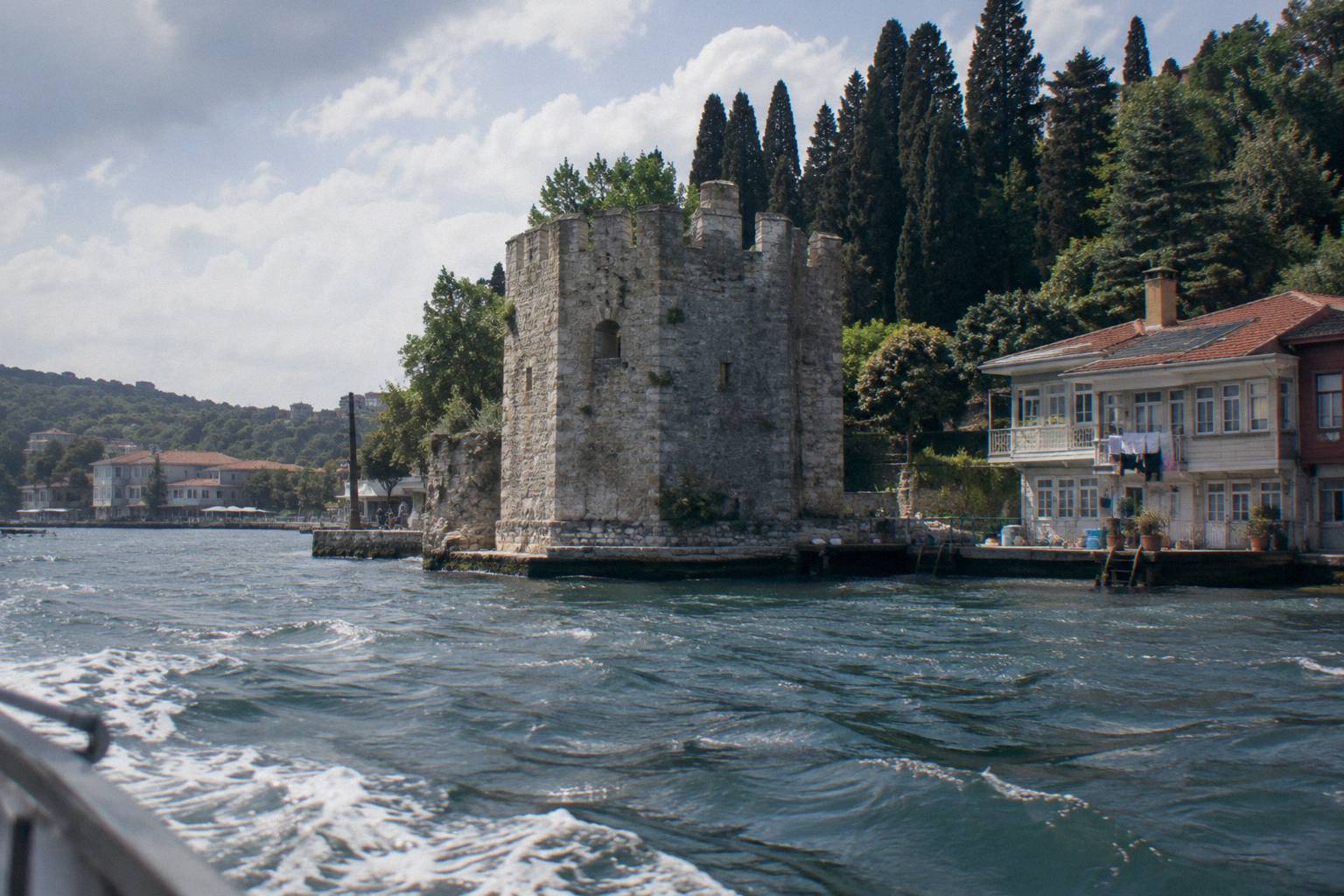
Anadolu Hisari is the older of the two, the oldest surviving Turkish architectural structure in Istanbul, and it stands on the Asian bank in the Beykoz neighbourhood. From a passing boat it reads as a small walled complex with a tower, set low against the water.
The Asian fortress does not announce itself. Boats heading north pass Kuscusuku and the wooden yalis first, and then the tower of Anadolu Hisari slides past on the right, close enough that the stonework is legible without binoculars. It is a single compact keep with walls dropping almost to the waterline, framed by cypress and the hillside of Beykoz behind.
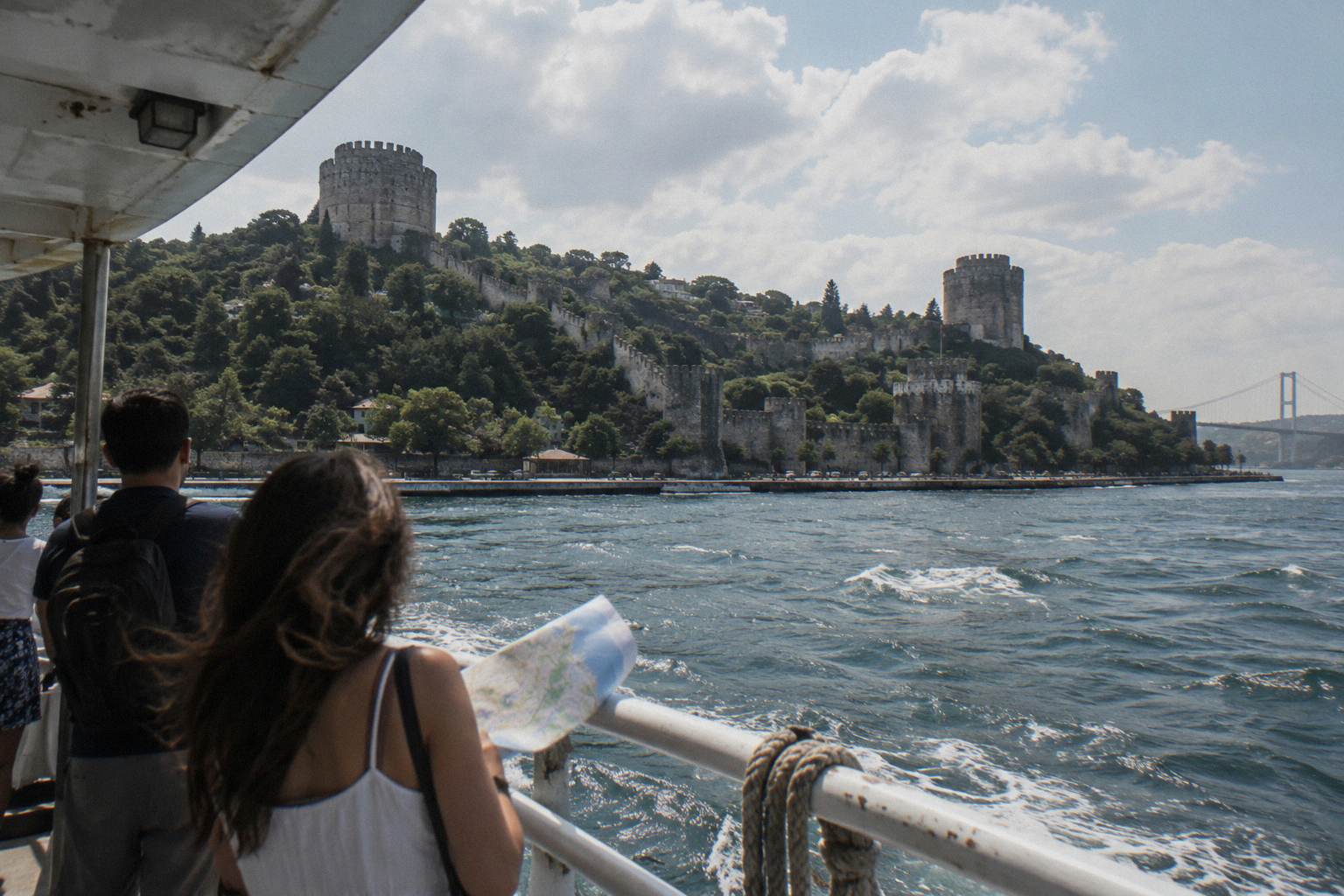
The European fortress is the opposite experience: a long curtain of walls and towers climbing its hill, with the great round tower at the shore end. Boats pass it on the left over several minutes, which is why photographers on northbound trips set up on the port rail in advance. The sequence of both passes fits inside about ten minutes of sailing on most 2-hour routes.
For a daylight pass at the smallest outlay, the shared audio boat is the natural fit. The 1 Or 2 Hour Audio Boat (from €6 per person, rated 4.8 from 1,254 reviews) splits its route by duration: the 1-hour option turns at the First Bosphorus Bridge and never reaches the fortresses, while the 2-hour option runs about an hour's sailing up the European shore to the Second Bridge and comes back along the Asian side, passing both fortresses on the way. Details and booking options are on the 1 Or 2 Hour Audio Boat page. Check availability
The commentary on that boat is an audio guide in 30 languages, played through the guest's own headphones, with unlimited Turkish tea and Nescafe on board and a restroom; check-in is at the operator's office next to the Eminonu pier, and the boat has indoor and outdoor seating plus WiFi.
That 1-hour versus 2-hour split deserves emphasis because it is the single most common booking mistake around the fortresses. The 1-hour option is a pleasant run to the First Bridge and back, but the fortresses stand north of the Second Bridge's southern approach, so the shorter turn never sees them. Anyone buying specifically for Rumeli Hisari needs the 2-hour option, on that trip or on the Audio Boat With Hotel Pickup (from €20 per person, rated 4.6 from 415 reviews), which runs the full 2-hour route with shared pickup from selected central areas included.
For context on where these two piers sit relative to each other, the Eminonu or Kabatas pier comparison explains why the shared boats leave from Eminonu while most yachts use Kabatas.
Which Side Of The Boat To Stand On
The two fortresses sit on opposite banks, so the side that matters on deck depends on which one the boat is passing and in which direction it is travelling. Northbound boats show Rumeli Hisari to port and Anadolu Hisari to starboard, and the sides swap on the return leg.
In practice most 2-hour routes run north along the European shore and come back along the Asian shore. That pattern means Rumeli Hisari passes close on the left going up, and Anadolu Hisari passes close on the right coming back, so a full circuit gives a near-side view of each fortress in turn. Standing at the bow or stern rail rather than the sides covers both passes without moving.
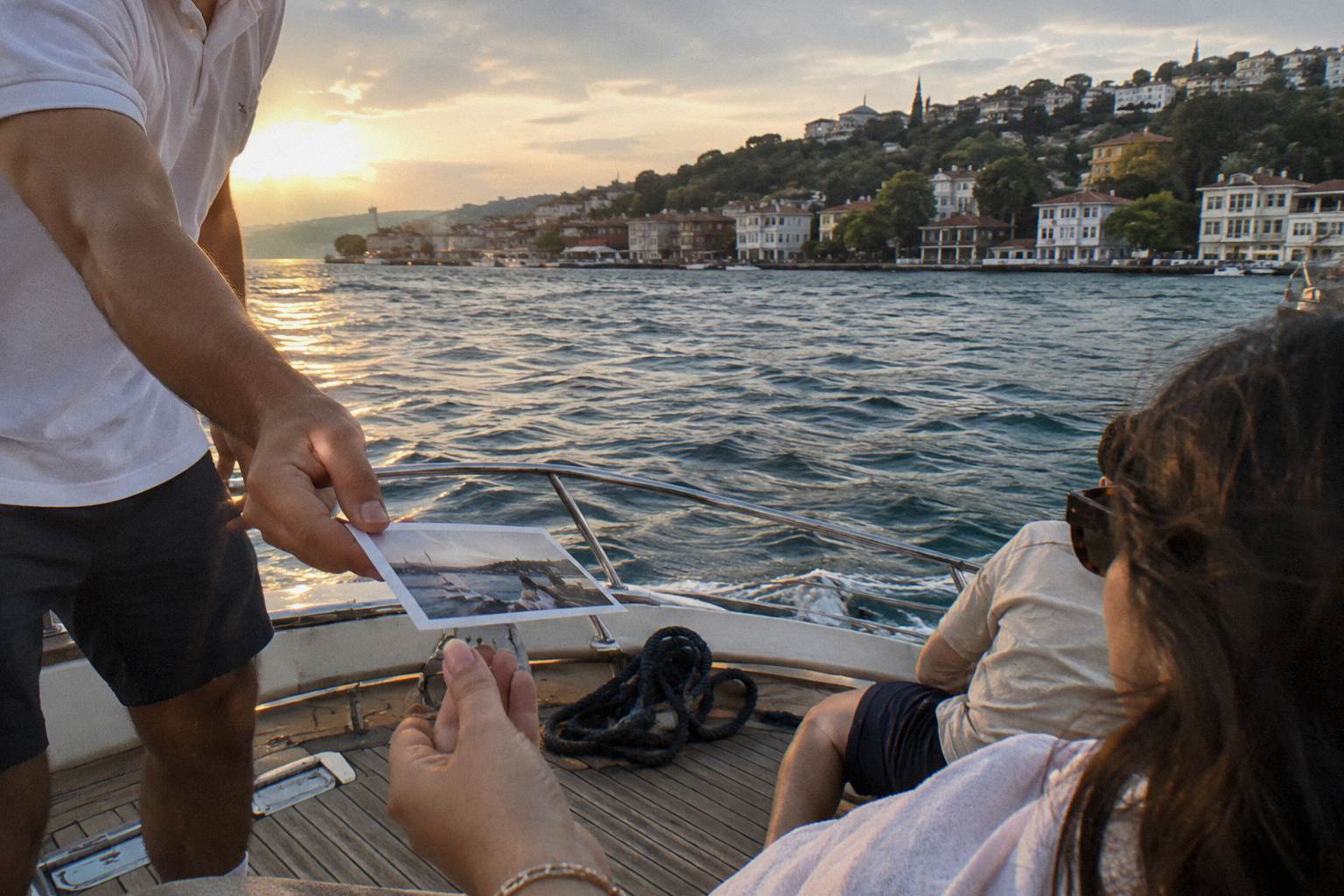
Sunset changes the arithmetic. Light comes from the west in the evening, which means the European bank, and Rumeli Hisari with it, is lit from behind the boat on a northbound evening run, while the Asian bank falls into shade earlier. The reverse holds in the morning: Anadolu Hisari is backlit at the start of the day and Rumeli Hisari catches the light. For anyone serious about the photograph, a northbound morning pass favors the European walls, and an evening return leg gives the cleanest light on them from mid-channel.
The sunset times below are for the 15th of each month, and they shift the whole colour sequence across the year; the times are approximate and apply only to the day named.
| 15th Of | Sunset Around | What It Means For The Pass |
|---|---|---|
| January | 18:00 | Fortress stretch in dusk on evening sails |
| February | 18:38 | Lit walls by the pass on most evening trips |
| March | 19:10 | Golden light on the European bank |
| April | 19:43 | Full daylight at the fortresses on most sunset trips |
| May | 20:14 | Daylight pass, colour arriving after the turn |
| June | 20:37 | Bright pass, sunset later toward the bridges |
| July | 20:35 | Bright pass, colour on the return leg |
| August | 20:03 | Warm light reaching the European walls |
| September | 19:14 | Golden hour near the turn point |
| October | 18:24 | Lit walls on the return, dusk after |
| November | 17:45 | Fortress stretch near nightfall |
| December | 17:36 | Evening trips see the fortresses lit |
A sunset-specific yacht makes that light the product. Sunset Yacht, Optional Wine Upgrade runs 2 hours from €26 per person, rated 4.9 from 306 reviews, names Rumeli Fortress and Anadolu Hisari in its route, and includes a free printed souvenir photo, one per guest, alongside soft drinks and snacks; 2 glasses of wine come only with the wine-upgraded option, and hotel pickup is excluded at an extra charge. Its audio guide covers 11 languages alongside a live English-speaking guide.
The evening decision between a quiet sunset sail and a full dinner show is drawn properly in sunset yacht or dinner cruise on the strait, which compares the two formats route by route.
The shared audio boat covers the same water in daylight with the smallest commitment of any trip that reaches the fortresses. If the fortress pass is the goal and the budget is tight, its 2-hour option is the direct answer.
One caveat on seating applies to every boat here: the fortress stretch is the narrowest, quickest-moving part of the route, and the pass lasts minutes. Claiming a rail spot a few minutes before the Second Bridge comes into view ahead is worth more than any seat assignment at the pier.
Can You Go Inside The Fortresses After The Boat?
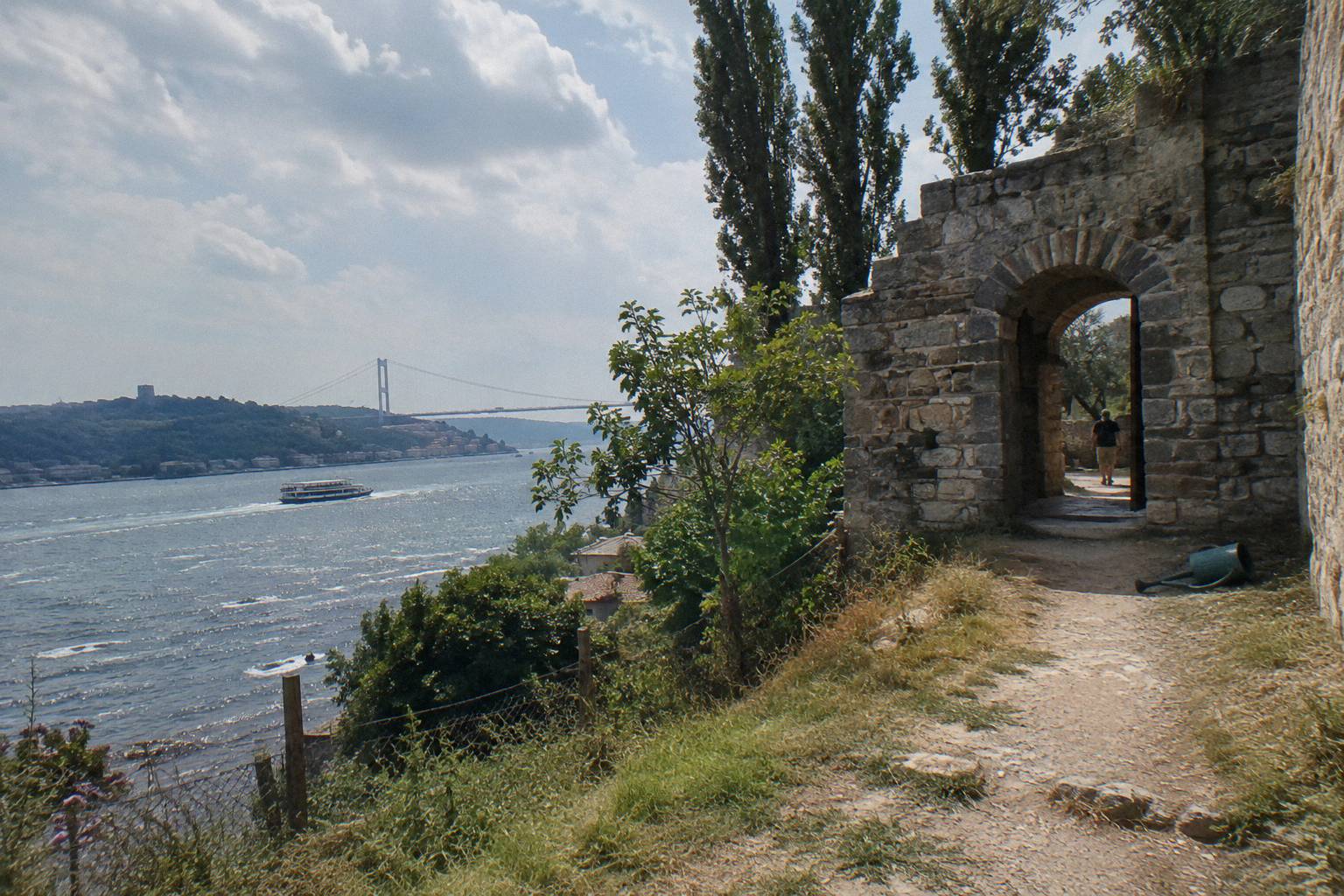
No tour boat lands at either fortress, and entry to each site is on foot through its own gate. Rumeli Hisari has been a museum since 1960, and visiting means leaving the water and walking in through the land gate, with tickets and hours to check before going.
The split between seeing and visiting is absolute on the water. Every trip in the table above marks the fortresses as passed without stopping, and no route in Istanbul combines a fortress landing with a boat leg. That is not a gap in the market; it is how the sites work. Rumeli Hisari is entered through its gate on the European bank, and Anadolu Hisari sits in its Beykoz neighbourhood reachable by road along the Asian shore.
Adding the museum visit is nonetheless straightforward on the same day. Rumeli Hisari stands beside the strait between Bebek and the Second Bridge, on the same shore the boats sail along, so the sequence of a morning boat from Eminonu and an afternoon at the museum involves no backtracking across the city. Admission and opening arrangements are set by the museum itself and are not part of any boat ticket; ask the operator or the museum before planning the walk.
For anyone who wants the fortress context widened rather than the fortress itself entered, two combinations exist among the trips here. The Dolmabahce Visit Plus Sunset Yacht (from €105 per person, rated 4.9 from 98 reviews) pairs a 3-hour guided palace visit with a 2-hour sunset yacht past the palaces to Bebek, though Dolmabahce admission is excluded and the yacht leg turns south of the fortresses. The Old City Day Plus Sunset Yacht (from €140 per person, rated 4.8 from 497 reviews) pairs the Blue Mosque, Hagia Sophia and Topkapi with a 2.5-hour sunset sail, again without reaching the fortress stretch.
Neither combination covers the fortresses from the water, which is precisely why the dedicated 2-hour shared boats above matter: they are the only inexpensive way to see the fortress pair at all. The trade-offs inside the palace combinations are worked through in Dolmabahce from the water or inside on a combo.
The Second Bridge And Where Short Routes Turn
The Fatih Sultan Mehmet Bridge, the Second Bridge, opened on 3 June 1988 and crosses the strait at the stretch where the fortresses stand. Any short route that reaches the bridge has already passed both fortresses, and most short routes turn there or at the First Bridge.
The Second Bridge is the useful landmark for reading any route text. Completed on 29 May 1988 and opened days later, it has a main span of 1,090 m and towers 105 m above road level, and it spans the water almost directly over the fortress section; its figures are in the record of the Second Bridge. When a route says it sails "to the Second Bridge and back", the fortresses are included by geography, named or not.
The same reading works against the First Bridge. The Bosphorus Bridge, completed 30 October 1973, is the oldest and southernmost of the three, between Ortakoy and Beylerbeyi, with a main span of 1,074 m; a route that turns there never sees the fortresses. The Third Bridge, opened 26 August 2016 with a main span of 1,408 m, stands near the Black Sea entrance, far beyond any short route.
| Bridge | Opened | Main Span | Fortress Pass? |
|---|---|---|---|
| Bosphorus Bridge (First) | 30 October 1973 | 1,074 m | No, the turn is south of them |
| Fatih Sultan Mehmet Bridge (Second) | 3 June 1988 | 1,090 m | Yes, the fortresses stand at this stretch |
| Yavuz Sultan Selim Bridge (Third) | 26 August 2016 | 1,408 m | Only on the Black Sea boats |
A note on the older suspension bridge: a toll was charged Europe to Asia from 1973 to 2023, a detail boat guides like to point out as the boat passes beneath. The bridges and their dates are the anchors most commentary uses to orient passengers, and the Second Bridge moment, fortress left, fortress right, span overhead, is the visual peak of the whole 2-hour route.
How much deck space and sightlines actually vary between the big shared boats and the yachts on this same water is covered in luxury yacht or big shared boat.
Yoros Castle And The Black Sea Boats
The third fortress of the strait is often confused with the pair above, and it should not be. Yoros Castle is a ruined Byzantine castle in Beykoz near Anadolu Kavagi, held by Genoa in the mid-15th century, per the history of Yoros Castle. It sits at the Black Sea mouth, kilometres beyond the fortress stretch, reachable only by the two Black Sea boats among the trips here and by the public long tour.
Of those two, the Half-Day Black Sea Boat With Lunch runs 5 hours from Eminonu, from €97.79 per person, rated 4.0 from 190 reviews, with a local guide and lunch included; its route runs from Eminonu past the Galata Tower silhouette and the First Bridge to the Black Sea mouth, with a stop at Anadolu Kavagi to walk up to Yoros Castle. The Extended Lunch To Black Sea Mouth runs 4 to 5 hours from Kabatas, from €150 per person, rated 4.5 from 61 reviews, with lunch, one soft drink, coffee or tea, and hotel pickup from Fatih and Beyoglu included.
Those trips pass the Rumeli and Anadolu fortresses on the way north as well, so in one sense they cover everything on this page plus Yoros Castle. What they do not offer is the slow, close pass: the long boats are covering 31 km of strait, and the fortress stretch is a small part of a long day. The full anatomy of the long route, village stop included, is in Anadolu Kavagi and the Black Sea mouth.
| Route Type | Reaches | Fortresses Seen |
|---|---|---|
| 1-hour shared option | First Bridge and back | None |
| 2-hour shared or yacht routes | Second Bridge and back | Rumeli Hisari and Anadolu Hisari |
| Dinner boats | The lit central stretch | Rumeli Fortress on several routes, by night |
| Black Sea boats | Anadolu Kavagi and the Black Sea mouth | Both, plus the walk to Yoros Castle |
So the choice comes down to what the fortress visit is for. A close daylight pass of the two historical fortresses: the 2-hour shared audio boat or any sunset yacht that names them. The third fortress and the open sea as well: one of the two long boats, at a multiple of the time and the fare.
Whatever the pick, the pattern holds across every trip named here: free cancellation up to 24 hours before the start, ratings printed with their review counts, and the fortresses shown from the water, never landed at.
Common Questions About The Two Fortresses
Can You Visit Rumeli Hisari After A Boat Trip?
Yes, but separately. No tour boat lands at the fortress; visiting means walking in through the land gate on the European bank, where Rumeli Hisari has been a museum since 1960. Tickets and opening arrangements come from the museum, not from any boat ticket.
Which Boat Passes Closest To The Two Fortresses?
Any 2-hour route that reaches the Second Bridge passes both fortresses at close range: the 2-hour option of the 1 Or 2 Hour Audio Boat (from €6 per person, 4.8 from 1,254 reviews) and the sunset yachts from Kabatas, several of which name Rumeli Hisari and Anadolu Hisari in their route text.
Does The 1-Hour Boat From Eminonu See The Fortresses?
No. The 1-hour option turns at the First Bosphorus Bridge, which stands south of the fortress stretch. The fortresses sit at the Second Bridge, reached only by the 2-hour option or by longer routes.
Is Yoros Castle The Same As Rumeli Hisari?
No. Yoros Castle is a ruined Byzantine castle near Anadolu Kavagi at the Black Sea mouth, kilometres north of the fortress stretch, reached only by the two Black Sea boats and the public long tour. Rumeli Hisari is the Ottoman fortress built 1451 to 1452 on the European bank just south of the Second Bridge.
Which Side Of The Boat Are The Fortresses On?
Northbound, Rumeli Hisari passes on the port (left) side and Anadolu Hisari on the starboard side; the sides swap on the return leg. Most 2-hour routes go up the European shore and back along the Asian shore, giving a near-side view of each in turn.
Do The Dinner Boats Pass The Fortresses?
Several do, by night. The Catamaran Dinner (from €29 per person, 4.5 from 1,453 reviews) lists Rumeli and Anadolu fortresses in its itinerary, and the Pereme, AMOR and Dinner And Shows boats name Rumeli Fortress in their routes. At night the walls appear as lit silhouettes.